
CONCH PIERCING GUIDE
Conch Piercing — At a Glance
| Placement | Inner or outer cartilage bowl |
| Pain level | 7/10 — moderate |
| Initial healing | 3–6 months |
| Full healing | 9–12 months |
| Starting jewellery | Flat-back stud, 18 gauge |
| Best post-heal styles | Studs or hoops |
| Jewellery from | $180 AUD |
| Aftercare appointments | Complimentary |
what is a conch piercing?
A conch piercing is one of the most impactful placements for adding depth and dimension to your ear. Sitting at the centre of the ear’s cartilage, it seamlessly integrates into any stack, allowing for limitless personalisation to suit your aesthetic.
The name comes from its resemblance to the spiral of a conch shell — the piercing sits in the smooth, rounded cartilage just above where the lobe meets the harder inner ear.
In this guide, we’ll explore the types of conch piercings, pricing, process, healing time, aftercare, and how to style this distinctive placement with confidence.
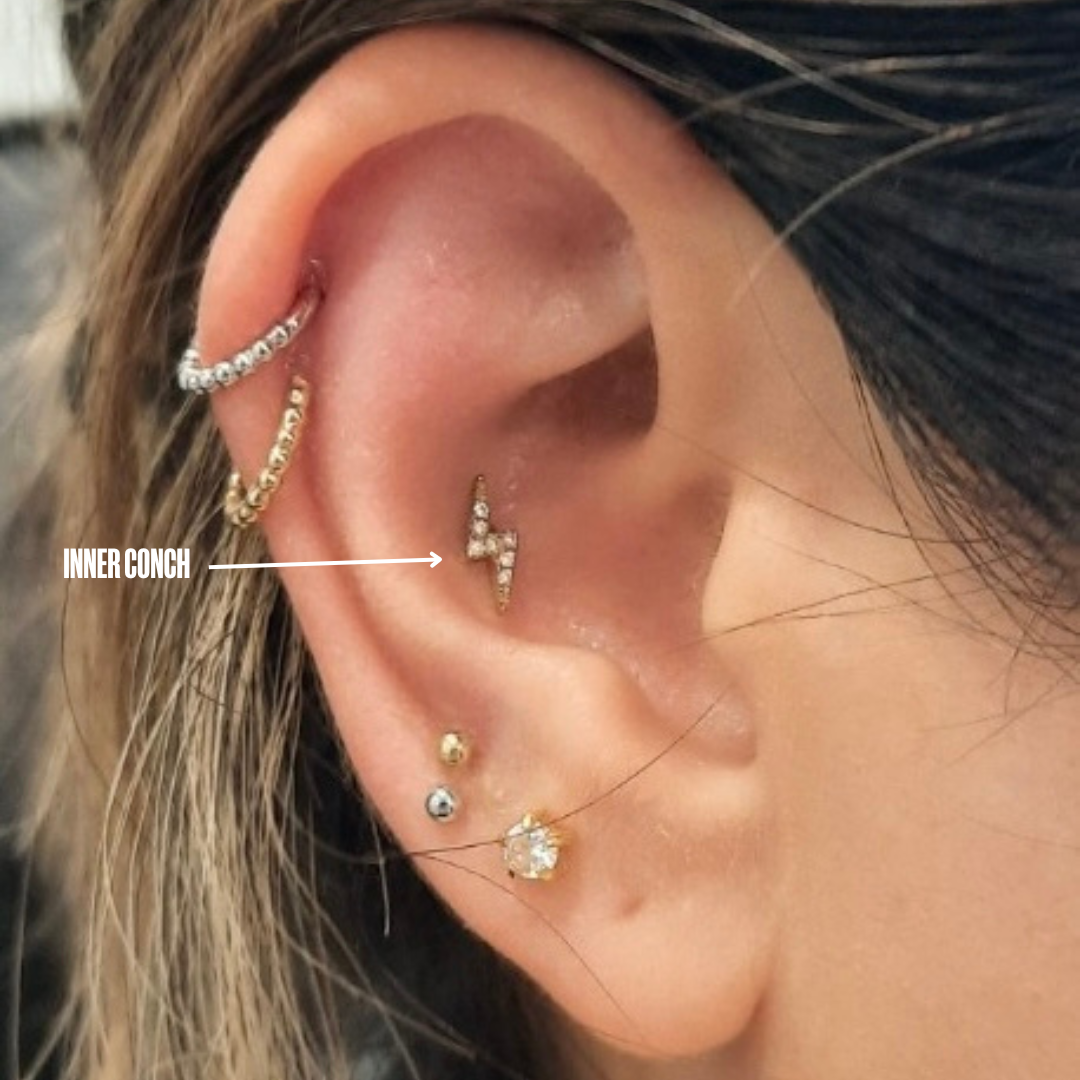
INNER CONCH PIERCING
Inner Conch Piercing
The inner conch sits toward the centre of the ear, near the natural fold of the cartilage. This placement is typically styled with a stud, creating a refined focal point within your stack.
Because this area features thicker cartilage, inner conch piercings tend to require a longer healing period than other piercings — patience and proper aftercare are key to a smooth recovery.
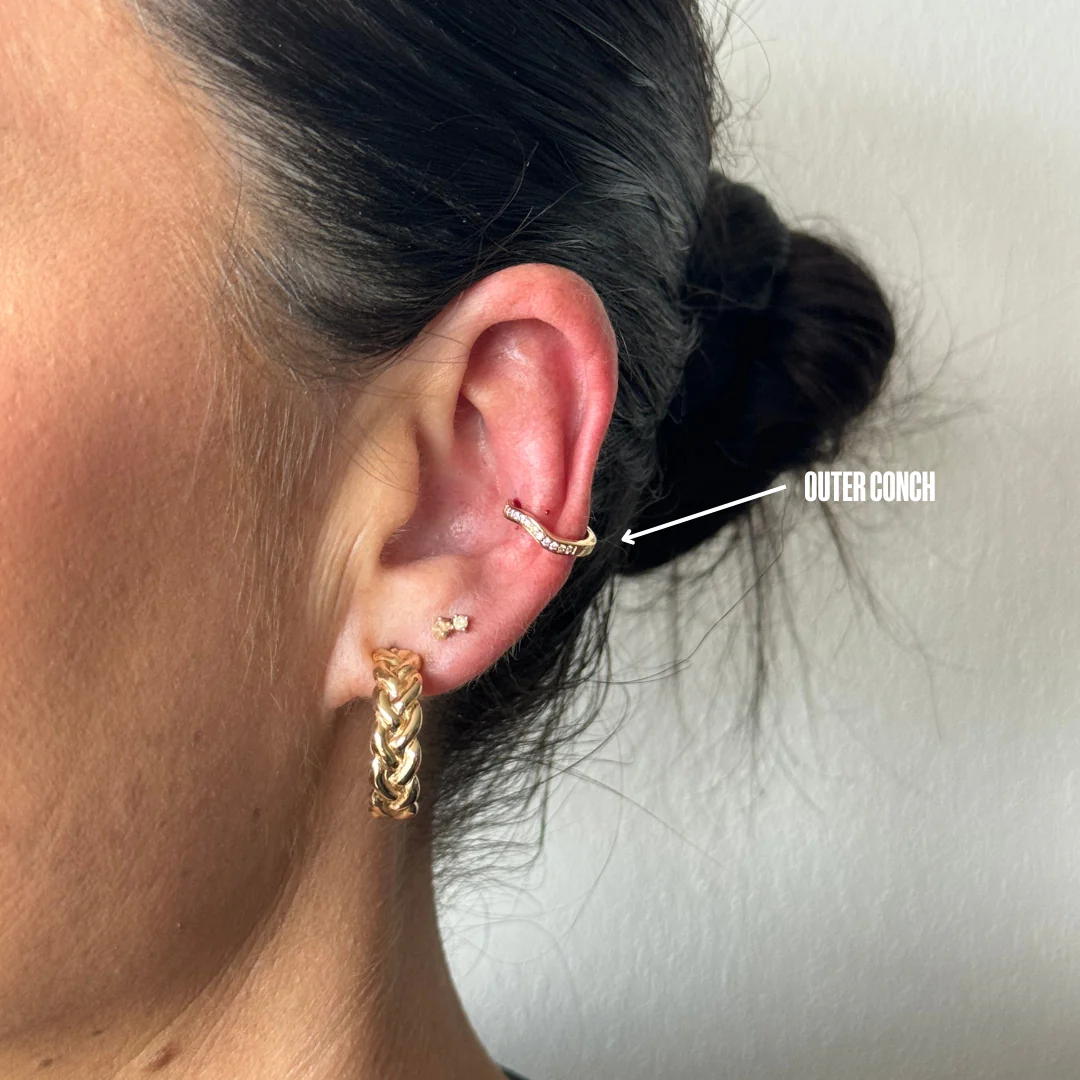
OUTER CONCH PIERCING
Outer Conch
The outer conch is located along the outer edge of the ear’s cartilage. This placement offers more flexibility in positioning, including both upper and lower variations. It’s ideal for those wanting to incorporate hoops or rings into their styling once healed.
The outer conch generally heals more quickly than the inner conch, making it a popular choice for clients wanting a statement look with slightly less commitment to healing time.
Ear Curation
Design your perfect stack before anything is pierced. Our expert piercers map your anatomy, discuss your aesthetic, and help you select jewellery that suits your ear shape and lifestyle. Covetear carries only implant-grade solid gold and gold vermeil pieces — what you choose is worn through the entire healing process, so the right choice matters from day one.
Shop Conch Jewellery →The Piercing
Your piercer sterilises the ear with a medical-grade solution and marks your chosen placement — confirmed with you for symmetry and balance. A sterile, single-use 18-gauge needle is used. Never a gun. Needles allow for precision and minimise trauma to the tissue. Your selected jewellery, typically a flat-back stud, is installed immediately. Pain level: 7/10 — brief, well tolerated, and over in seconds.
Book Your Piercing →Healing
The conch sits within thicker cartilage — patience is key. Expect redness, warmth and light swelling in the first 72 hours. Weeks 2–4 may bring mild pulsing and light crusting — both normal. By weeks 5–12, the piercing feels comfortable but is still healing internally. Avoid sleeping on it, avoid friction, and never remove the jewellery — the channel can begin to close within hours. Your piercer may recommend downsizing your post at this stage.
Book a Follow-up →Fully Healed
After 9–12 months, the channel is complete and your jewellery can be safely changed for the first time. The wait matters — changing too early risks irritation, scarring, and regression. Once healed, the conch is one of the most versatile and enduring placements on the ear. Wear a minimal flat-back stud daily, or switch to a statement hoop for evenings. This is a piercing built to be part of your look for life — and the right piece makes all the difference.
Aftercare
Clean with NeilMed™ Piercing Aftercare Spray twice daily for 6–8 weeks, then once daily. Always wash hands before handling. Pat dry — never rub. Avoid cotton buds and Q-Tips as loose fibres irritate the piercing. When washing hair, rinse the piercing with water first before applying spray. Covetear offers unlimited complimentary aftercare appointments across all four studios — we're with you through every stage of healing.
Book a Free Aftercare Appointment →HOW TO STYLE


Everything you need to know about the conch piercing
The conch is one of the most striking placements in ear curation — a centrepiece that adds depth, dimension, and unmistakable intention to any stack. Here's everything you need to know before booking yours.
What is a Conch Piercing?
A conch piercing sits in the smooth, bowl-shaped cartilage at the centre of the ear. Named for its resemblance to the spiral of a conch shell, the placement divides into two distinct variations: the inner conch, which sits closer to the ear canal and is typically styled with a flat-back stud, and the outer conch, which runs along the cartilage ridge and suits both studs and hoops once fully healed.
Both integrate seamlessly into any curated ear stack, offering a versatile focal point that works across aesthetics — from the refined and minimal to the deliberately layered.
How Much Does a Conch Piercing Hurt?
On a standard pain scale, the conch sits at approximately 7 out of 10. Because the placement passes through thicker cartilage than a lobe or helix piercing, the sensation can feel more intense — though it remains brief and well tolerated. The discomfort lasts only a moment during the piercing itself.
At Covetear, we use a sterile, single-use 18-gauge needle. Never a gun. Needle piercings allow for greater precision, minimise tissue trauma, and significantly reduce both pain and the risk of post-piercing complications.
How Long Does a Conch Piercing Take to Heal?
Initial healing takes approximately 3–6 months, with full healing complete by 9–12 months. In the first 72 hours, expect redness, warmth, swelling, and light bleeding — all normal. Weeks 2–4 may bring mild pulsing and light crusting as the tissue begins to repair. By weeks 5–12, the piercing may feel comfortable, but it is still healing internally.
Around the 5–12 week mark, your piercer may recommend downsizing your post. This is a standard part of the healing process and promotes a cleaner, faster recovery. Wait the full 9 months before changing your jewellery for the first time — changing earlier risks irritation, scarring, and regression.
If the jewellery is removed without replacement at any point, the piercing can begin to close within hours. Always keep jewellery in place to protect the channel.
Can I Sleep on My Conch Piercing?
No — not during the healing period. Sleeping directly on the piercing creates sustained pressure and friction on the channel, which can delay healing, cause irritation bumps, or push the jewellery out of alignment. A travel pillow with a hollow centre is a practical solution for side sleepers during the first 6–9 months.
How to Care for a Conch Piercing
Clean with NeilMed™ Piercing Aftercare Spray twice daily for the first 6–8 weeks, then reduce to once daily as healing progresses. Hold the spray 3–6cm from the piercing and apply to both the front and back. Pat completely dry afterwards — never rub — and avoid cotton buds or tissues, as loose fibres can irritate the site.
Always wash hands before touching the area. When washing hair, rinse the piercing with clean water before applying aftercare spray to remove any shampoo or conditioner residue. Avoid unnecessary contact throughout the healing process.
At Covetear, we offer unlimited complimentary aftercare appointments across all four Australian studios. Our team is available seven days a week to support every stage of your healing.
When Can I Change My Conch Piercing Jewellery?
Wait a minimum of 9 months before changing your jewellery for the first time. While the piercing may look and feel healed by the 3–6 month mark, the internal channel is still forming. Changing too early significantly increases the risk of irritation, scarring, and the channel closing or migrating.
When you are ready, book a jewellery change appointment at Covetear. Our piercers will assess the piercing, confirm full healing, and install your new piece safely.
How Do I Know if My Conch Piercing Is Infected?
Mild redness, swelling, and crusting in the early weeks are expected and not cause for concern. Signs of a potential infection are more distinct: sudden or severe swelling, yellow or green discharge, red streaking from the piercing site, excessive bleeding, or fever-like symptoms.
If you experience any of these, contact us immediately. Our team is available seven days a week for aftercare support. If a bacterial infection is suspected, consult your doctor promptly. Early intervention is always the right approach.